
by Denise Franklin | Feb 17, 2025 | Agent Value, For Sellers
Selling a home is a major financial decision, and while the real estate market offers opportunities, it also comes with challenges. In 2025, many home sellers unknowingly make mistakes that can reduce their chances of getting the best deal. Whether you’re planning to sell soon or just want to prepare for the future, here are 3 critical mistakes to avoid when selling your home.
1. Overpricing Your Home
One of the most common mistakes home sellers make is overpricing their property. While it may seem like a good idea to set a high asking price and leave room for negotiation, overpricing can backfire.
Why Overpricing Hurts Your Sale:
- Buyer Perception: If a home stays on the market too long, potential buyers might assume there’s something wrong with it.
- Price Reductions: If your home doesn’t sell quickly, you may have to reduce the price, which can make it seem less desirable.
- Fewer Offers: A high asking price can deter potential buyers, leading to fewer offers and ultimately a lower final sale price.
Tip: Work with a real estate agent who understands your local market. A competitive, realistic price can attract more buyers, which may lead to a higher sale price in the long run.
2. Neglecting Repairs and Updates
Skipping essential repairs and updates is a costly mistake many home sellers make. Buyers typically prefer homes that are move-in ready, and visible damage or outdated features can deter them, even if the price seems right.
What to Fix Before Listing:
- Minor Repairs: Fix small issues like leaky faucets, cracked walls, or faulty light switches to give the impression of a well-maintained home.
- Update Outdated Features: Consider updating your kitchen or bathroom with affordable renovations that give your home a modern feel.
- Boost Curb Appeal: First impressions matter. Clean up your landscaping, paint the front door, and maintain walkways to make your home inviting from the outside.
Tip: Even if you can’t afford major renovations, small improvements can help your home stand out and potentially fetch a higher price.
3. Not Preparing for Showings
How your home looks during showings can determine if it sells quickly — or at all. Many sellers underestimate the importance of staging and preparing their property for potential buyers.
Steps to Prepare Your Home:
- Clean Thoroughly: A clean home signals to buyers that it’s well-cared for and ready to move into.
- Declutter: Remove personal items, unnecessary furniture, and anything that makes the space feel cramped. Let the home’s potential shine through.
- Stage Your Home: Simple staging, like rearranging furniture or adding decorative touches, can help buyers imagine living in the space.
- Professional Photography: High-quality photos for online listings are a must. Great photos can attract more buyers and lead to more showings.
Tip: Presenting a well-staged, clean, and tidy home will increase the chances of a quick sale at the right price.
Conclusion: How to Sell Your Home Successfully in 2025
To sell your home in 2025 successfully, avoid these three mistakes:
- Price your home realistically based on current market conditions.
- Make necessary repairs and updates to ensure your home is move-in ready.
- Prepare for showings by decluttering, cleaning, and staging your property.
By following these simple steps, you’ll improve your chances of a quick and profitable sale. Partnering with an experienced real estate agent can also guide you through the process and ensure your home is market-ready.

by Denise Franklin | Dec 16, 2024 | Agent Value, For Sellers, Selling Tips
In today’s digital age, it’s tempting to rely on automated tools for everything — including figuring out how much your house is worth. But be careful. The automated estimates you’re seeing online often miss key details that affect the true market value of your home.
Before you toss a for sale sign in your yard and expect to bring in the number you saw for your house online, you need to understand why these tools generally aren’t spot-on and why working with an expert real estate agent is the best way to get an accurate picture of what your house is really worth.
The Myth: Online Home Value Estimates Are Accurate Online home valuation tools give you an approximate value for your house based on the data that’s publicly available for your home. While this can give you a rough starting point, the keyword here is rough. As an article from Ramsey Solutions says:
“Online Home Value Estimators Aren’t 100% Accurate . . . The estimates are only as reliable as the amount of public record data the real estate websites can access. The less data gathered for your particular neighborhood, county and state, the less you can depend on this number.”
The Reality: Online Estimates Miss Key Factors Here’s the biggest issue with online estimates: they don’t take into account the unique aspects of your home or your local market. And that’s why an agent’s expertise can make such a difference when figuring out what your house is really worth. Here’s an example. A real estate agent will also factor in:
The Home’s Condition: Online tools can’t tell whether your home has been well-maintained or if it needs significant repairs. The condition of your house plays a huge role in its value, and only an in-person walk-through can account for that. The Latest Neighborhood Trends: Is your neighborhood up-and-coming? Are there new developments or amenities nearby that make your home more desirable? Automated tools often overlook local trends that can significantly affect the value of your home. Accurate Comparable Sales: While online estimates may use past sales data as a baseline, they don’t always reflect the most recent or most relevant comparable sales, or comps. Real estate agents, on the other hand, have access to up-to-date market data and can give you a much more accurate estimate based on real-time sales in your area. Agents have a deep understanding of the local market, and they can provide insights that automated tools simply can’t match. As Bankrate explains:
“Online estimation tools determine pricing using algorithms that rely on publicly available information. These algorithms can vary widely from one tool to the next and typically don’t account for a home’s current condition or any upgrades or renovations that are not reflected in public records. So they are not as accurate as in-person methods, like a real estate agent’s comparative market analysis . . .”
Bottom Line While online home value estimates can be a helpful tool to get a rough idea of what your home is worth, they aren’t foolproof. The true value of your home depends on a range of factors that automated tools just can’t account for.
To get the most accurate estimate, work with a local real estate agent. That way you have expert guidance and up-to-date market insights to set the best possible price for your home.

by Denise Franklin | Dec 13, 2024 | Agent Value, For Sellers
In today’s ever-changing real estate market, more home sellers are choosing to hire professional real estate agents to assist with the sale of their property. While some may have previously opted for a DIY approach, the benefits of working with an experienced agent have become increasingly clear. From expert pricing strategies to smoother negotiations, the reasons why more sellers are turning to real estate agents are plentiful.
1. Market Expertise and Local Knowledge
One of the primary reasons sellers are hiring real estate agents is for their in-depth knowledge of the local housing market. Real estate agents have access to data and trends that many sellers simply don’t have, enabling them to accurately price a property for maximum return. Understanding neighborhood values, buyer demand, and the competitive landscape helps agents set a price that not only attracts offers but also ensures that the home doesn’t sit on the market too long—avoiding the stigma of a “stale” listing.
2. Comprehensive Marketing Strategies
Real estate agents have access to a variety of marketing tools that are critical for giving properties the exposure they need to sell. From professional photography and virtual tours to leveraging the MLS (Multiple Listing Service), agents ensure that homes are seen by a wide pool of potential buyers. Additionally, they can create tailored marketing campaigns across social media platforms and real estate websites, all designed to put the property in front of the right buyers. This broad exposure increases the chances of receiving multiple offers and can lead to a quicker sale at a desirable price.
3. Skilled Negotiation
Real estate agents are trained negotiators, capable of handling the back-and-forth of offers and counteroffers with a level of professionalism and objectivity that is difficult to achieve for sellers handling the process on their own. An agent can help sellers navigate tough negotiations, from contingencies to price adjustments, and make sure the seller’s best interests are represented every step of the way. They also know when to push for a higher price or accept a reasonable offer, helping sellers achieve the best possible outcome.
4. Navigating the Legalities and Paperwork
The paperwork involved in selling a home can be daunting. From disclosure forms to the purchase agreement, real estate transactions require a significant amount of legal and contractual knowledge. One of the biggest advantages of hiring a real estate agent is that they handle all of the legalities associated with the sale. They ensure that all documents are properly filled out, signed, and filed according to local laws, reducing the risk of legal issues or delays during the closing process.
5. Saving Time and Reducing Stress
Selling a home can be an overwhelming and time-consuming process, especially when sellers are managing it on their own. Real estate agents take much of the burden off the seller’s shoulders. They handle everything from scheduling showings and open houses to responding to inquiries and coordinating inspections. By outsourcing these tasks to a professional, sellers can reduce stress and focus on other important aspects of their lives, such as preparing for a move or settling into their next home.
6. Access to a Network of Professionals
Another significant advantage of working with an agent is their access to a network of trusted professionals. From home inspectors and contractors to stagers and cleaners, real estate agents often have relationships with service providers who can help prepare a home for sale or resolve any issues that arise. Sellers benefit from these connections, as they can trust the recommendations made by their agent and often receive special rates or priority scheduling.
7. Pricing Strategy and Market Timing
Knowing when to list a property and at what price is key to a successful sale. Real estate agents perform detailed market analyses to ensure that a home is priced competitively. They take into account comparable properties in the area, recent sales trends, and even current economic conditions. Additionally, agents are familiar with the ebbs and flows of the market, and they can advise sellers on the best time to list their home for optimal results. This strategic approach maximizes the chance of a quicker sale at a price that aligns with the seller’s goals.
8. Maximizing Sale Prices
Research consistently shows that homes listed with a real estate agent tend to sell for higher prices than those sold by the owner alone. A professional agent knows how to highlight the best features of a property and present it in the most appealing way. Whether through staging advice, professional photography, or positioning in the right market, real estate agents work to attract the highest number of potential buyers. This can lead to competitive offers, which may result in a sale price above the initial asking price.
9. Minimizing Risks and Avoiding Pitfalls
Selling a home is a significant financial transaction that comes with inherent risks. There are numerous potential pitfalls—from setting the wrong price to missing important disclosures. Real estate agents help minimize these risks by guiding sellers through every stage of the process, ensuring that no crucial steps are overlooked. They also help sellers avoid common mistakes that could lead to costly delays, lost opportunities, or legal issues.
10. The Bottom Line: Higher Success Rate
Ultimately, hiring a real estate agent improves a seller’s chances of closing a successful sale. In a competitive market, professional guidance can make all the difference. Not only do real estate agents offer valuable expertise, but they also provide peace of mind that the sale is being managed by a skilled professional who is dedicated to getting the best possible result for the seller.
Conclusion
While selling a home independently may seem appealing to some, the growing trend of sellers hiring real estate agents underscores the many advantages of working with a professional. From pricing and marketing to negotiation and paperwork, agents bring invaluable expertise to the table. In today’s fast-paced and competitive real estate market, partnering with an experienced agent increases the likelihood of a smooth, profitable sale, ultimately making it a smart choice for more and more sellers.

by Denise Franklin | Oct 31, 2024 | Agent Value, For Buyers, For Sellers
Feeling a bit unsure, or even afraid, to move with everything going on right now? The decision to move shouldn’t be scary, it should be exciting. And the best way to eliminate any fear is to work with a pro.
Real estate agents are so much more than just transaction facilitators; they’re trusted guides to help you navigate the complexities of the housing market with confidence and ease. And a great agent can turn what may feel like a daunting process into a manageable—and even enjoyable—experience.
That’s why, in a Bright MLS survey, respondents agreed partnering with an agent is essential and helps cut down on their stress:
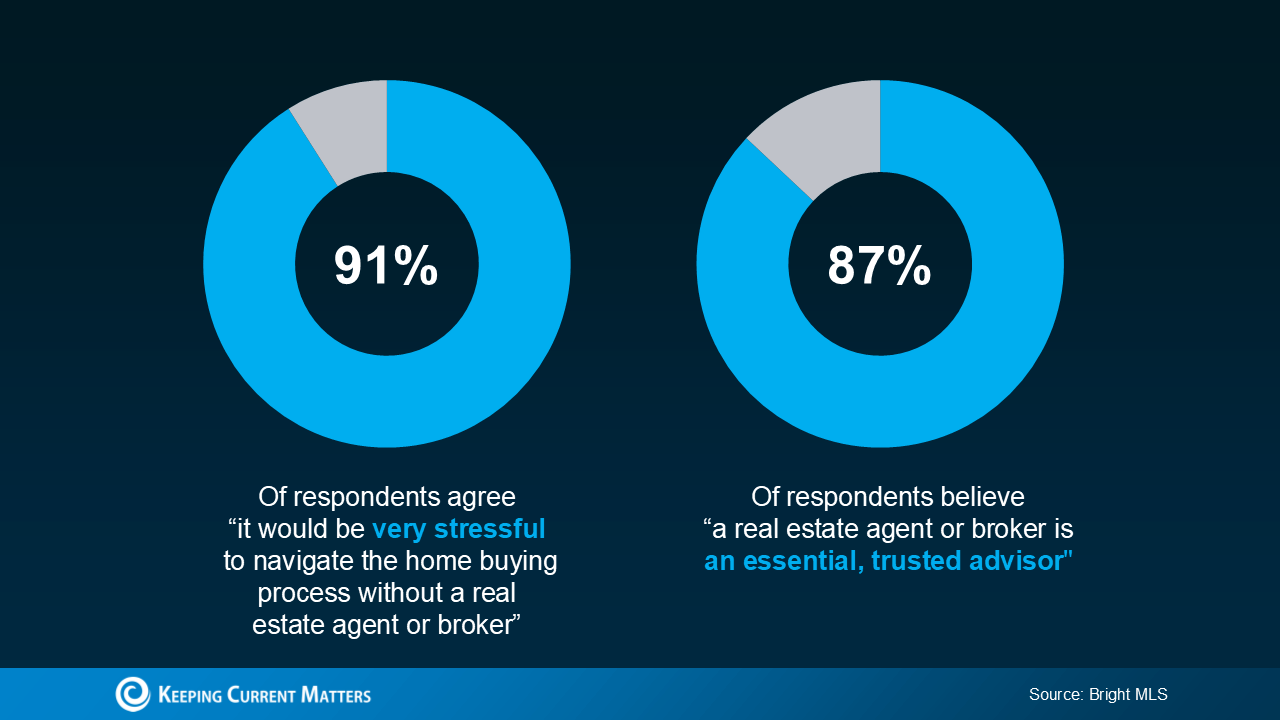 Here are just a few examples of why that expertise can give you so much peace of mind.
1. Explaining the Current Market
You may be seeing misleading headlines about a potential market crash, falling prices, and more. And when you’re not an expert yourself, it’s easy to get swept up in the clickbait and let that scare you. As Jason Lewris, Co-Founder and Chief Data Officer at Parcl, says:
“In the absence of trustworthy, up-to-date information, real estate decisions are increasingly being driven by fear, uncertainty, and doubt.”
A real estate agent is there to help you separate fact from fiction and to debunk any headline that does more to terrify than clarify. With their deep understanding of local market trends, home values, inventory levels, and more, they’ll help you feel more confident in your decision.
2. Walking You Through the Process Step-by-Step
Is this your first time going through the process as a buyer or a seller? Don’t worry. Your agent will walk you through every step along the way, from the initial conversation all the way to closing day. As NerdWallet explains:
“If it’s your first time buying — or selling — you’re likely to come across terms you don’t recognize and tasks that seem baffling. What’s the difference between pending and contingent? Why do you need title insurance? How thoroughly do you need to fill out disclosure forms? Your agent should be able to confidently and competently explain it all.”
And if you’ve done this before, but it’s been a while, an agent will tailor how they explain it all to your previous experience. They won’t bog you down with details, they’ll only give you as much of a refresher as you want and need.
3. Advocating for Your Best Interests
Does the thought of dealing with the back and forth of the transaction make your palms sweaty? Put that anxiety aside. Your agent is a skilled negotiator trained for these exact scenarios. And the best part is, they work for you. So, it’s your goals they’re using that expertise to fight for.
They’ll work to secure the best possible terms for you, whether it’s getting a better price as a homebuyer or negotiating a higher sale price as a seller. This removes the fear of a bad deal or being taken advantage of during the process.
4. Solving Any Unexpected Problems Quickly
Worried something is going come up that you don’t know how to handle? Rest assured, your agent has you covered.
Agents are skilled problem-solvers. They not only address issues, but they get ahead of them before they become deal-breakers – and that helps keep the process on track. So, if any challenges do pop up, know your agent has the skills and experience necessary to find a solution that works for you.
Bottom Line
Don’t let fear or uncertainty hold you back from achieving your goals. With an expert agent by your side, you can move forward with confidence.

by Denise Franklin | Oct 10, 2024 | Agent Value
If you’re toying with the idea of selling your house, you’re probably wondering how much it’ll cost. To be honest, the final number will depend on several factors like the offer you accept, if you help with your buyer’s closing costs, how many repairs you tackle, and more.
So, to give you a ballpark of what to expect, here’s some information on a few of the expenses you’ll want to be ready for (see graph below):
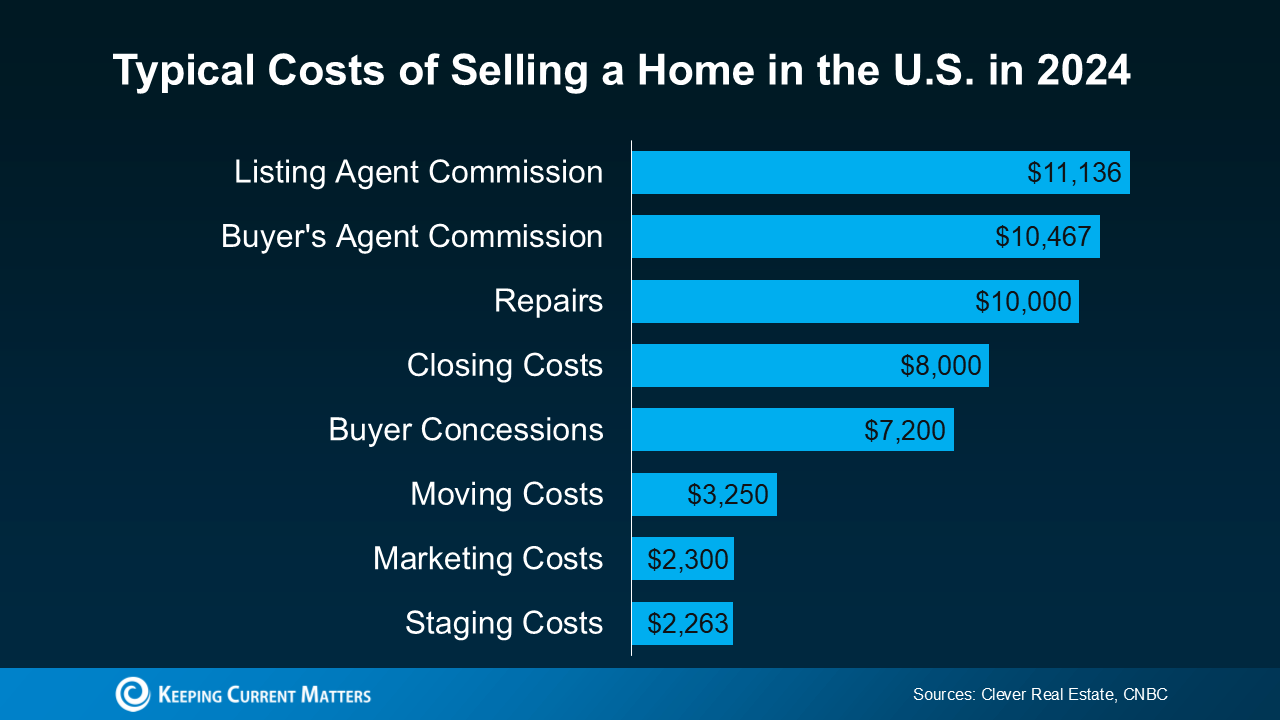 But here’s something that puts those costs into perspective. Most homeowners today have a substantial amount of equity built up in their homes, and that means they stand to make significant gains when they sell. Chances are, you do too. This can help quickly recoup these selling costs. You may even have enough equity leftover to put some toward your next home purchase too.
Let’s dive into a few of the costs from the graph above, so you have a bit more context on what they include and where you may be able to save some money, when it makes sense.
Closing Costs and Commission
These are the fees you’ll pay at the closing table to cover various aspects of the sale. You’ll have your own closing costs and you may even offer to pay some of the buyer’s as a concession. As U.S. News Real Estate explains:
“Closing costs are fees that are paid to finalize the transaction and transfer ownership of the home to the buyer . . . Sellers can expect to pay 2% to 4% of the sale price of the home in fees and taxes on top of the agent commission. Based on the national median home sale price, this means that closing costs in 2023 for sellers are about $7,740 to $15,480. . .”
Taxes are going to vary by state and agent commissions depend on what you agree upon upfront. And keep in mind, that the numbers in the chart above are just an example, not exact figures. Not to mention, if you put money toward things like your property taxes, mortgage escrow, etc. as part of your current mortgage payments – there’s a chance you’ll get a credit back at closing that can help offset some of these selling expenses.
Pre-Listing Inspection and Repairs
One optional step some sellers take is having a pre-listing inspection. It gives you an idea of what may pop up later on in the buyer’s inspection – because those are the items a buyer may ask you to toss in a credit (or concession) to cover later on.
This allows you to get a jump on any repairs and tackle them before you list, so your house is set up to impress from the start.
Again, if you want to skip this step, an agent can help. They’ll be able to give you advice on things like paint colors, small cosmetic repairs, what buyers are looking for, and whether it’s worth tackling anything else ahead of time. This will help make sure you’re spending money on things that are most likely to net you a solid return on your investment.
Home Staging
As inventory grows, you may want to take a few extra steps to make sure your house stands out. Staging is an optional way to make sure your house shows well. It can include bringing in rental furniture if the house is vacant or art to warm up the walls. Some staging can even be done virtually once the photos are taken. But, in general, how much does it cost? According to Bankrate:
“Home sellers typically pay somewhere between $782 and $2,817 in home staging costs . . . but the price tag can vary widely.”
If you want to skip this step, you could opt to lean on your agent’s advice for what looks good and what may feel cluttered. A great agent will suggest things like removing a chair to open up the flow of a room, laying down a rug to add warmth to a space, or taking down photographs to de-personalize strategic areas.
Why Leaning on an Agent Is Key
If you’re looking to cut down on your costs, you have options. But be careful of where you trim. You may be able to skip staging or a pre-listing inspection since those are optional, but you don’t want to skimp and sell without a pro.
An agent is your go-to expert throughout the transaction. They’ll offer customized advice every step of the way, including how to stage the house and what repairs to tackle. This can help you avoid hiring an outside stager or having to pay for a pre-listing inspection.
But that’s not the only way your agent adds value. They’ll also create tailored marketing and pricing strategies that’ll highlight the house’s best assets and any work you did to get the home show ready. And that can actually help your house sell for more in the long run.
Bottom Line
Want a better picture of what you should expect when you sell your house? Have a conversation with a local real estate agent.

by Denise Franklin | Sep 26, 2024 | Agent Value, Buying Tips, For Buyers, For Sellers, Selling Tips
When it’s time to buy or sell a home, one of the most important decisions you’ll make is who you’ll work with as your agent. That choice will have an impact on your entire experience and how smoothly it goes.
As you figure out who you’ll partner with, it’s important to know what to expect and what to look for. Unfortunately, there may be some myths holding you back from making the best decision possible. So, let’s take some time to address those, and make sure you have the information you need to find the right agent for you.
Myth #1: All Real Estate Agents Are the Same
You might think all agents are the same – so it doesn’t matter who you work with. But, in reality, agents have varying levels of experience, specialties, and market knowledge, which can have a big impact on your results. For example: you’ll get much better service and advice from someone who is a true expert in their field. As Business Insider explains:
“If you were planning to get your hair done for a special event, you’d want to visit a stylist who specifically has experience doing that type of work — you wouldn’t make an appointment with someone who primarily does kids’ hair. The same concept applies to finding a real estate agent. If you have a smaller budget, you probably don’t want to work with an agent who exclusively sells multimillion-dollar properties.”
Take some time to talk with each agent you’re considering. Ask about their experience level and what they specialize in. This will help you find the one that’s the best fit for your search.
Myth #2: You Can Save Money by Not Using an Agent
As a seller, you may think you can save money by not working with a pro. However, the expertise, negotiation skills, and market knowledge an agent provides generally saves you money and helps you avoid making costly mistakes. Without that guidance, you could find yourself doing something like overpricing your house. And that’s a misstep that’ll cost you when it sits on the market for far too long. That’s why U.S. News Real Estate says:
“When it comes to buying or selling your home, hiring a professional to guide you through the process can save you money and headaches. It pays to have someone on your side who’s well-versed in the nuances of the market and can help ensure you get the best possible deal.”
Myth #3: Agents Will Push You To Spend More
You may also be worried an agent will push you to buy a more expensive house in order to increase their commission. But that’s not how that should go. A good agent will respect your budget and work hard to find a home that truly fits your financial situation and needs. With their market know-how, they’ll point you toward the best option for you, rather than try to pad their own pockets on your dime. As NerdWallet explains:
“Among other things, a good buyer’s agent will find homes for sale. A buyer’s agent will help you understand the type of home you can afford in the current market, find listed homes that match your needs and price range, and then help you narrow the options to the properties worth considering.”
Myth #4: Market Conditions Are the Same Everywhere, So Why Do I Need a Pro?
Maybe you believe housing market conditions are the same no matter where you are. But that couldn’t be further from the truth. Real estate markets are highly localized, and conditions can vary widely from one area to another. This is why you can’t pick just anyone you find online. You should choose an agent who’s an expert on your specific local market. As a recent article from Bankrate says:
“Real estate is very localized, and you want someone who’s extremely knowledgeable about the market in your specific area.”
You’ll know you’ve found the right person when they can explain the national trends and how your area stacks up too. That way you’re guaranteed to get the full picture when you ask: “how’s the market?”
Bottom Line
Don’t let myths keep you from the expert guidance you deserve. With market knowledge and top resources, a trusted local real estate agent isn’t just helpful, they’re invaluable.
In what could be one of the biggest financial decisions of your life, having the right pro by your side is a game changer. Connect with an agent to make sure you get the best outcome possible.
