
by Denise Franklin | Jan 29, 2025 | Buying Tips, For Buyers
In a significant shift in the housing market, 17% of homebuyers are opting for multi-generational homes— the highest level ever recorded by the National Association of Realtors (NAR). But what’s driving this growing trend? While multi-generational living has traditionally been used to care for aging parents, today’s homebuyers are increasingly choosing this option for a different reason: affordability.
Why More People Are Choosing Multi-Generational Homes
Multi-generational homes—where families, adult children, or even distant relatives live together under one roof—offer various benefits that make them an attractive solution for today’s challenges. Traditionally, this living arrangement was driven by the need to care for older family members. However, the landscape has shifted due to rising homeownership costs and the need for more affordable living options.
According to the latest data from NAR, the main reason more people are choosing multi-generational living today is cost savings. The increasing prices of homes, combined with rising mortgage rates, are making it difficult for many individuals or smaller families to afford homes on their own.
By pooling their financial resources, multi-generational families can share the costs of homeownership, such as the mortgage, utility bills, and maintenance expenses. This collaborative approach makes it easier to manage the financial burden of purchasing a home, allowing families to live more comfortably without overextending themselves.
Financial Benefits: Affordability and More Space
One of the most compelling reasons to consider multi-generational living is the financial benefit it offers. Families can combine their incomes to secure a larger home or even afford a home in a more desirable location—something that might otherwise be out of reach with today’s high home prices.
As Rick Sharga, Founder and CEO at CJ Patrick Company, puts it, “There are a few ways to improve affordability… purchase a property with a family member.” This growing trend of multi-generational households reflects the need for solutions that ease the financial pressures of homeownership.
Beyond the Finances: Strengthening Family Bonds
In addition to the financial perks, multi-generational living can also bring families closer together. Living with extended family provides more opportunities for quality time, strengthens family relationships, and promotes a sense of togetherness. For those who value family connections, this living arrangement can foster deeper bonds while providing mutual support.
Conclusion: A Worthwhile Consideration
If you’re finding it difficult to afford a home on your own, buying a multi-generational home could be a solution worth considering. Not only does it provide a way to overcome financial hurdles, but it also offers the chance to create lasting family memories.
Before making your decision, it’s important to consult with a local real estate agent who can help you explore your options and find a home that meets the needs of your family. With the rising costs of homeownership, a multi-generational home might be the ideal choice for those looking for more space, less financial stress, and stronger family ties.

by Denise Franklin | Jan 14, 2025 | Buying Tips
This is the time when a lot of people take a moment to reflect and set their goals for this year. And as you picture what you want your 2025 to look like, one thing that may pop into your mind is the vision of you in a new home. But how do you get there? And where do you start?
Here’s some advice that can help you get the ball rolling.
Focus on Your Why
To lay the foundation, you need to focus on your why. While the dollars and cents are important, so is the driving force behind your desire to move. Maybe you need more space for a growing family, want to sell so you can downsize, or are finally ready to buy your first home. Whatever your reason, it’s important to keep it front and center.
Your why is what helps you stay focused. Share your motivation with your agent and they’ll use their expertise to help support that goal, no matter what the market looks like. With a great agent by your side, you’ll have someone to guide you, problem-solve, and keep you moving forward until you can check that goal off your to-do list.
Get Clear on What You Need
Then it’s time to figure out what your next home needs to have. How many bedrooms do you need? If you don’t have a designated home office, is that a deal-breaker? What about a big fenced-in backyard? Knowing your must-haves and nice-to-haves makes the search a lot smoother. Since affordability is still tight, it’s important to have a clear idea of your essential items upfront. Maybe you can flex a bit on location, if it’s got everything else you’re looking for. Go over those essential items with your agent and they’ll help you focus on the homes that check the boxes that matter most while staying within your price range.
Know Your Numbers
Before you jump in, take a look at your finances. How much have you saved? What monthly payment feels comfortable? Getting clear on your budget early will help you know what’s possible. The best way to do this is by partnering with trusted real estate professionals, like a local agent and a lender. They’ll help you:
- Plan for your down payment and look into down payment assistance programs
- Understand the equity you have in your current home and how you can use it to fuel your next move if you’re selling
- Get pre-approved for a mortgage so you know what you can borrow
Lean on a Pro To Guide You
It can be hard to know where to start, but you don’t have to do it alone. A real estate agent knows what you need to do to get ready to buy or sell, how to navigate the process, and can answer your questions every step of the way. As Bankrate puts it:
“. . . now more than ever, it’s smart to lean on the guidance of an experienced local real estate agent. If you want to enter the housing market in 2025, whether as a buyer or a seller, let a pro lead the way for you.”
Remember, buying or selling is a big milestone and a great goal for this year. With the right expert on your team, you’ll feel confident and ready to take on the market.
Bottom Line
If buying or selling a home is part of your goals for 2025, now’s the time to get started. Focus on your why, know what you need, and connect with trusted pros to make it happen. Team up with an expert and make this the year you accomplish your real estate resolutions.

by Denise Franklin | Dec 24, 2024 | Advice for Buyers, Buying Tips
Photo by Grant Durr on Unsplash
Dreaming of owning a vacation home where you can escape the hustle and bustle of everyday life? Finding the picture-perfect vacation home can be an exciting yet challenging process, whether a beachside bungalow, a chic city apartment, or acozy mountain cabin. Here’s a guide to help you navigate the journey and make a smart investment.
1. Define Your Needs and Wants
Start by making a list of what you need and want in a vacation home. Consider factors like location, size, amenities, and proximity to attractions. Do you want a place near the beach, the mountains, or a city? How many bedrooms and bathrooms do you need? Is a pool or a large backyard important to you? Having a clear idea of your priorities will help narrow down your options.
2. Set a Budget
Determine how much you can afford to spend on a vacation home. These ongoing costs include property taxes, insurance, maintenance, and utilities, as well as the purchase price. Getting pre-approved for a mortgage is a good idea to understand your financing options. Remember to factor in additional costs, such as property management fees and marketing expenses, if you plan to rent out the property when you’re not using it.
3. Research Locations
Location is key when it comes to vacation homes. Research different areas to find a location that suits your lifestyle and preferences. Consider the climate, local attractions, and the overall vibe of the area. It’s also essential to consider accessibility – how easy is it to get to your vacation home from your primary residence? If you plan to rent it out, look for locations with high rental demand.
4. Visit Potential Properties
Once you’ve identified a few potential locations, start visiting properties. Pictures and descriptions online can only tell you so much – seeing a property in person will give you a better sense of its condition, layout, and surroundings. Take your time to explore the neighborhood, talk to locals, and get a feel for the area. If possible, visit during different seasons to understand how the property and location change throughout the year.
5. Consider the Rental Potential
If you are considering renting out your vacation home, research the area’s rental market. Look at similar properties to see how much they’re renting for and how often they’re booked. Working with a property management company in the local area to handle bookings, maintenance, and guest communication can be very beneficial. A good rental income can help offset the costs of owning a vacation home and even turn it into a profitable investment.
6. Check Local Regulations
Before making a purchase, check local regulations regarding vacation rentals. Some areas have strict rules about short-term rentals, including zoning laws, permit requirements, and occupancy limits. Make sure you understand these regulations to avoid any legal issues down the road.
7. Work with a Real Estate Agent
A real estate agent working in the local area can be a priceless resource in your search for the perfect vacation home. They can help you find vacation homes that meet your criteria based on in-depth market knowledge, and can guide you through the buying process. Look for an agent who specializes in vacation properties and has experience in your desired location.
8. Think Long-Term
When buying a vacation home, think about your long-term plans. Will this property still meet your needs in five or ten years? Consider your lifestyle and whether the property can accommodate those changes. A vacation home is a significant investment, so choosing a property you’ll enjoy for years to come is essential.
Conclusion
Finding the perfect vacation home takes time, research, and careful planning. By defining your needs, setting a budget, researching locations, and considering rental potential, you can make an intelligent investment that provides years of enjoyment. Happy house hunting, and here’s to finding your dream getaway!
I hope this helps! If you have any other questions or need further assistance, feel free to ask.

by Denise Franklin | Dec 13, 2024 | Buying Tips, First-Time Buyers, For Buyers, Inventory
When it comes to buying a home, many buyers face the age-old dilemma of choosing between a newly built property and an older home. While older homes have their charm and character, newly built homes offer a range of benefits that can make them a more appealing option. If you’re in the market for a new place to call home, here are the top two reasons why you should consider looking at newly built homes.
1. Modern Amenities and Design Features
One of the most compelling reasons to consider a newly built home is the modern amenities and design features that come with it. In recent years, homebuilders have made significant strides in creating homes that cater to contemporary lifestyles. Here’s what you can expect from newly constructed homes:
- Open Floor Plans: Many new homes embrace open-concept designs that promote a sense of space and light. These layouts often combine the living, dining, and kitchen areas into a flowing, airy space, perfect for both entertaining guests and spending time with family.
- Energy Efficiency: New homes are built with the latest energy-efficient technologies, including insulation, windows, and appliances that reduce energy consumption. This means lower utility bills and a smaller carbon footprint. Many homes also incorporate renewable energy solutions like solar panels, which further enhance their efficiency.
- Smart Home Technology: More new homes are being built with integrated smart home systems. This might include automated lighting, security systems, thermostats, and even appliances. With these technologies, homeowners can enjoy greater control over their home’s systems and improve convenience and safety.
- Updated Features: Whether it’s the latest kitchen appliances, luxurious bathroom fixtures, or premium flooring materials, newly built homes tend to offer high-quality, contemporary finishes that make a house feel fresh and stylish. These features often require less upkeep and can enhance your daily living experience.
2. Lower Maintenance and Fewer Repairs
Another major advantage of buying a newly built home is the reduced need for repairs and maintenance. Older homes may have charm, but they also come with potential hidden costs, such as outdated plumbing, aging electrical systems, and worn-out roofing materials. Here’s how a new home can save you time and money:
- Brand New Systems: When you purchase a newly built home, everything is fresh and under warranty. This includes essential systems like plumbing, electrical wiring, heating, and cooling systems. You’re less likely to encounter unexpected issues that could lead to costly repairs in the near future.
- Modern Materials: Building materials in newer homes are more durable and efficient. Whether it’s the roofing, siding, or windows, these materials are designed to last longer and withstand wear and tear better than older alternatives.
- Home Warranties: Many newly built homes come with warranties from the builder that can cover major repairs for the first few years. This can give you peace of mind knowing that, should something go wrong, you won’t have to pay out of pocket for major repairs right after moving in.
- Lower Maintenance: New homes are designed to be low-maintenance, meaning that the finishes and fixtures are built to last longer without needing constant upkeep. Whether it’s modern, durable flooring or energy-efficient appliances, new homes generally require less time, effort, and money to maintain.
Conclusion
While older homes certainly offer unique characteristics and historical charm, newly built homes bring significant advantages in terms of design, efficiency, and long-term value. With modern amenities, energy-saving features, and minimal maintenance, buying a new home can provide you with a stress-free living experience that meets contemporary needs. If you’re in the market for a home that offers peace of mind, style, and functionality, looking at newly built homes should be at the top of your list.

by Denise Franklin | Oct 17, 2024 | Buying Tips, For Buyers, Mortgage Rates
Homeowners typically slow down their moving plans as the summer months wrap up, and as a result, fewer homes are listed for sale in the fall. It’s a predictable, seasonal trend in real estate. But this year, mortgage rates came down at the same time the number of homes on the market usually starts to decline. So, what happened? More homeowners decided to sell, so more homes came to the market.
The most recent data from Realtor.com reveals that in September, the number of homes put up for sale increased by 11.6% compared to this time last year.
As the green circle in the graph below shows, the typical September decline in homes coming to the market didn’t happen – that number actually went up (see graph below):
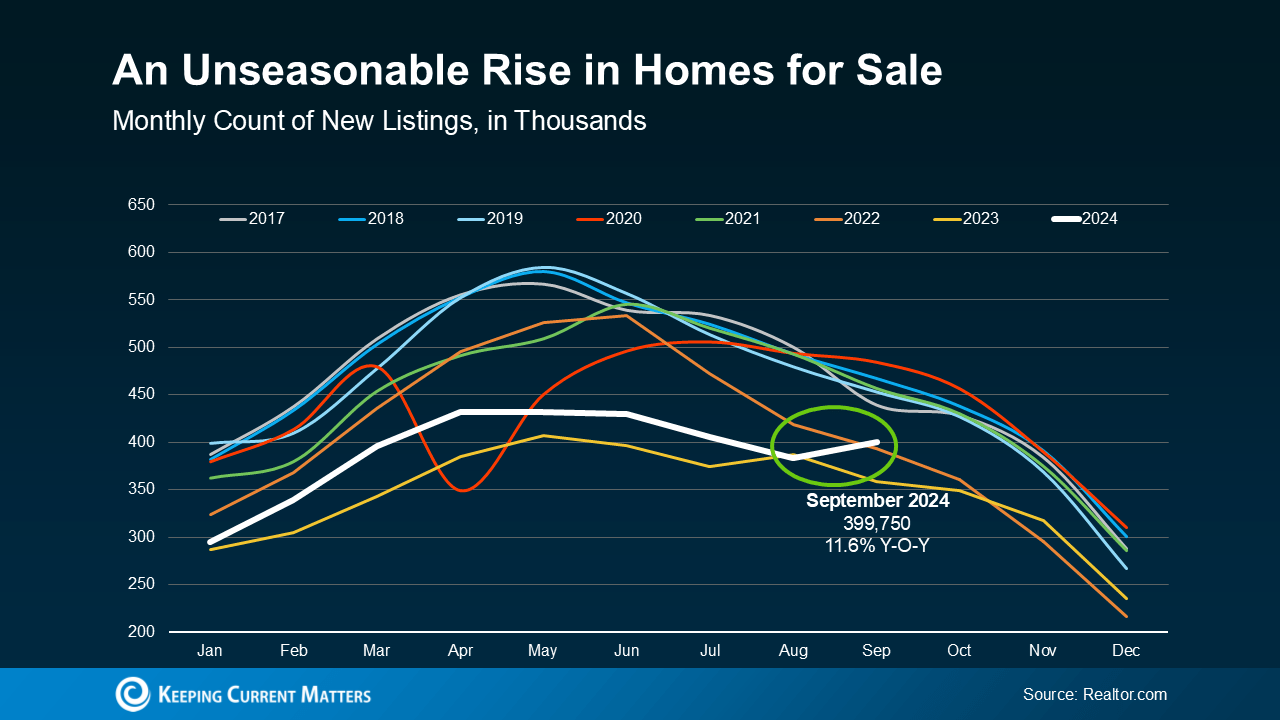 Ralph McLaughlin, Senior Economist at Realtor.com, explains why there was an unseasonable rise:
“This sharp increase is largely due to the decline in mortgage rates in mid-August, enticing homeowners to sell.”
So, as rates came down at the end of the summer, more people jumped into the market and decided to make their move.
What Does This Mean If You’re Looking To Buy a Home?
It means more fresh options to choose from than you’ve had in a while – not the ones that have been sitting around, unsold.
But keep in mind, mortgage rates have been volatile lately, ticking up slightly in recent weeks, which could limit the number of people who feel comfortable with the idea of selling in the months ahead. And in this market, it’s mortgage rates that are largely driving homeowner decisions.
Why Buy Now, Rather Than Wait?
Whether you’re looking for a starter home, an upgrade, or hoping to downsize, you have more homes to choose from right now. And if you can find what you’re looking for, know that these new, fresh options won’t be on the market forever. So, staying on top of what’s available in your local area with a trusted agent is key.
And remember, one month doesn’t make a trend. So, what does that mean going forward? Whether more homeowners than normal continue to put their houses on the market will largely depend on what happens with mortgage rates and the economic factors that impact them, like inflation, employment, and the reactions by the Federal Reserve.
With that in mind, now might be your moment, while more homes are available – if you’re ready, willing, and able to buy this fall.
Lawrence Yun, Chief Economist at the National Association of Realtors (NAR), explains:
“The rise in inventory – and, more technically, the accompanying months’ supply – implies home buyers are in a much-improved position to find the right home and at more favorable prices.”
Bottom Line
As rates came down at the end of the summer, sellers started to trickle back into the market, which means buyers have more choices right now. And working with a trusted local real estate agent is the best way to take advantage of your new options before they’re all scooped up.

by Denise Franklin | Sep 26, 2024 | Agent Value, Buying Tips, For Buyers, For Sellers, Selling Tips
When it’s time to buy or sell a home, one of the most important decisions you’ll make is who you’ll work with as your agent. That choice will have an impact on your entire experience and how smoothly it goes.
As you figure out who you’ll partner with, it’s important to know what to expect and what to look for. Unfortunately, there may be some myths holding you back from making the best decision possible. So, let’s take some time to address those, and make sure you have the information you need to find the right agent for you.
Myth #1: All Real Estate Agents Are the Same
You might think all agents are the same – so it doesn’t matter who you work with. But, in reality, agents have varying levels of experience, specialties, and market knowledge, which can have a big impact on your results. For example: you’ll get much better service and advice from someone who is a true expert in their field. As Business Insider explains:
“If you were planning to get your hair done for a special event, you’d want to visit a stylist who specifically has experience doing that type of work — you wouldn’t make an appointment with someone who primarily does kids’ hair. The same concept applies to finding a real estate agent. If you have a smaller budget, you probably don’t want to work with an agent who exclusively sells multimillion-dollar properties.”
Take some time to talk with each agent you’re considering. Ask about their experience level and what they specialize in. This will help you find the one that’s the best fit for your search.
Myth #2: You Can Save Money by Not Using an Agent
As a seller, you may think you can save money by not working with a pro. However, the expertise, negotiation skills, and market knowledge an agent provides generally saves you money and helps you avoid making costly mistakes. Without that guidance, you could find yourself doing something like overpricing your house. And that’s a misstep that’ll cost you when it sits on the market for far too long. That’s why U.S. News Real Estate says:
“When it comes to buying or selling your home, hiring a professional to guide you through the process can save you money and headaches. It pays to have someone on your side who’s well-versed in the nuances of the market and can help ensure you get the best possible deal.”
Myth #3: Agents Will Push You To Spend More
You may also be worried an agent will push you to buy a more expensive house in order to increase their commission. But that’s not how that should go. A good agent will respect your budget and work hard to find a home that truly fits your financial situation and needs. With their market know-how, they’ll point you toward the best option for you, rather than try to pad their own pockets on your dime. As NerdWallet explains:
“Among other things, a good buyer’s agent will find homes for sale. A buyer’s agent will help you understand the type of home you can afford in the current market, find listed homes that match your needs and price range, and then help you narrow the options to the properties worth considering.”
Myth #4: Market Conditions Are the Same Everywhere, So Why Do I Need a Pro?
Maybe you believe housing market conditions are the same no matter where you are. But that couldn’t be further from the truth. Real estate markets are highly localized, and conditions can vary widely from one area to another. This is why you can’t pick just anyone you find online. You should choose an agent who’s an expert on your specific local market. As a recent article from Bankrate says:
“Real estate is very localized, and you want someone who’s extremely knowledgeable about the market in your specific area.”
You’ll know you’ve found the right person when they can explain the national trends and how your area stacks up too. That way you’re guaranteed to get the full picture when you ask: “how’s the market?”
Bottom Line
Don’t let myths keep you from the expert guidance you deserve. With market knowledge and top resources, a trusted local real estate agent isn’t just helpful, they’re invaluable.
In what could be one of the biggest financial decisions of your life, having the right pro by your side is a game changer. Connect with an agent to make sure you get the best outcome possible.
