
by Denise Franklin | May 7, 2025 | Home Buyers, Mortgage Rates
If you’re a homeowner, homebuyer, investor, or real estate professional, you’re likely wondering: What happens to the housing market during an economic slowdown? As the economy cools, its ripple effects can be felt across home prices, mortgage rates, rental demand, and new construction.
In this article, we’ll break down what an economic slowdown means for the real estate market, including who might benefit—and who should be cautious.
1. Home Prices May Fall or Flatten
One of the first effects of a slowing economy is reduced homebuyer demand. When consumers feel uncertain about their income or job security, they’re less likely to make large purchases like a house. This can lead to:
- Slower home price growth
- Price drops in overvalued markets
- More price reductions and motivated sellers
In tougher economic conditions, foreclosures and distressed sales may rise, adding downward pressure on prices.
2. Home Sales Often Decline
Economic uncertainty often leads to fewer home transactions. Why?
- Buyers may wait for better conditions.
- Sellers may hold off, fearing a weak market.
- Mortgage lenders may tighten standards, reducing who can qualify.
This results in fewer listings, slower sales cycles, and lower market activity overall.
3. Mortgage Rates Could Drop—But With Limited Impact
During a slowdown, central banks often lower interest rates to stimulate spending. This can bring mortgage rates down as well, which is good news for borrowers.
However, low rates alone don’t guarantee a housing rebound. If consumer confidence is low, many buyers still choose to wait.
Quick tip: Savvy buyers with stable jobs may find this is a great time to buy with lower monthly payments.
4. Rental Demand May Increase
As buying becomes more difficult or uncertain, demand for rental housing tends to rise. This shift can benefit landlords, especially in:
- Urban areas
- High-cost markets
- Cities with younger populations
In some cases, rents may increase even if home prices fall.
5. New Construction Often Slows Down
Homebuilders are highly sensitive to economic trends. During a slowdown, many developers may:
- Delay or cancel projects
- Focus on lower-risk builds
- Struggle to secure financing
This can reduce new home inventory, which may help prevent a long-term oversupply.
6. Local Markets Will Vary
Not all housing markets react the same way during a slowdown. For example:
- Tech-driven cities or places with strong job markets may stay resilient.
- Overheated markets with recent rapid price growth may see sharper corrections.
- Affordable, growing areas may remain attractive for buyers.
Understanding your local market dynamics is crucial during uncertain times.
Conclusion: What Should You Do During a Slowdown?
An economic slowdown doesn’t always spell disaster for the housing market, but it does shift the landscape. Here’s how to think about your next move:
- Buyers: Look for opportunities in lower prices and interest rates.
- Sellers: Be realistic about pricing and flexible with negotiations.
- Investors: Monitor rental demand and long-term trends.
- Homeowners: Focus on financial stability and stay informed.
Whether you’re buying your first home or managing a real estate portfolio, staying informed and adaptable is key to navigating economic change.

by Denise Franklin | Apr 23, 2025 | For Buyers, Mortgage Rates
In today’s unpredictable housing market, mortgage rates seem to shift daily — sometimes even hourly. For homebuyers and homeowners looking to refinance, this uncertainty can feel overwhelming. But the good news? You can take control, even when mortgage rates are a moving target.
Here’s a practical guide to navigating rising and falling rates, so you can make confident, informed decisions.
🔍 Why Mortgage Rates Fluctuate
Before diving into what to do, it helps to understand why rates change in the first place. Mortgage rates are influenced by several factors, including:
- Inflation
- The Federal Reserve’s monetary policy
- Economic growth indicators
- Bond market performance
Because of these variables, rates can change quickly — sometimes without much warning.
🏦 1. Get Pre-Approved and Set a Budget
Why it matters: A mortgage pre-approval not only tells you how much you can afford, but it may also lock in a rate for 30 to 90 days. That gives you some breathing room if rates rise during your home search.
Bonus tip: Even if you’re pre-approved, continue monitoring rates. Some lenders offer updated rate quotes if you haven’t closed yet.
📈 2. Monitor Market Trends and Mortgage News
Stay informed by tracking mortgage rate trends through financial news, lender websites, and mortgage calculators. Pay attention to:
- Federal Reserve announcements
- Economic data like inflation reports and job numbers
- Real estate market updates
Key takeaway: Timing your move in the market isn’t about guessing; it’s about staying informed.
🧑💼 3. Work With a Mortgage Broker
Mortgage brokers have access to multiple lenders and loan products. They can help you:
- Compare rates quickly
- Find special programs or first-time buyer incentives
- Navigate rate lock options or flexible terms
Pro tip: A good broker can help you react quickly to market changes — a huge benefit when rates are shifting.
🔒 4. Use a Mortgage Rate Lock (With a Float-Down Option)
When you’re under contract, consider locking in your mortgage rate. This protects you if rates rise before closing.
What’s a float-down? Some lenders allow you to “float down” to a lower rate if the market drops significantly before you close. Be sure to ask about this feature when comparing lenders.
💸 5. Explore Adjustable-Rate Mortgages (ARMs)
If current fixed rates feel too high, an ARM might be a good temporary solution.
How ARMs work:
- You get a lower initial rate for the first 5, 7, or 10 years.
- After that, your rate adjusts periodically based on the market.
Best for: Buyers planning to move or refinance before the fixed period ends.
🎯 6. Consider Buying Mortgage Points
Mortgage points are upfront fees paid to lower your interest rate. This strategy can lead to long-term savings, especially if you plan to stay in your home for several years.
Example: Paying 1 point (equal to 1% of your loan) might reduce your rate by 0.25%.
Rule of thumb: Use a mortgage point calculator to see when your break-even point occurs.
🔁 7. Plan to Refinance When Rates Drop
If you need to buy when rates are high, keep refinancing on your radar. When the market improves, you can refinance to a lower rate and reduce your monthly payments.
Just be aware of:
- Closing costs
- Potential prepayment penalties
- How long you plan to stay in the home
✅ Final Thoughts
Yes, mortgage rates are unpredictable — but that doesn’t mean you’re powerless. With the right tools, timing, and team, you can make smart moves no matter what the market is doing.
Remember:
- Get pre-approved and lock in when the time is right.
- Explore adjustable-rate options and mortgage points.
Be ready to refinance when rates improve.

by Denise Franklin | Dec 24, 2024 | Inventory, Mortgage Rates
Image by Izhar Ahamed from Pixabay
Hey there! If you’ve been watching the housing market, you might have noticed some exciting changes as we move through November 2024. After a few years of a super hot seller’s market, things are starting to cool down, bringing a more balanced vibe for buyers and sellers. Let’s chat about what’s going on.
Mortgage Rates Are Dropping
One of the most significant changes this month is the drop in mortgage rates. Earlier this year, rates were pretty high, but now they’re coming down, which is excellent news for anyone looking to buy a home. The average 30-year fixed mortgage rate is around 6.5%, down from over 7% in the summer. Lower mortgage rates makes home loans more affordable and is likely to bring more buyers into the market.
Home Prices Are Stabilizing
Home prices have skyrocketed for a while, but now they’re starting to level off. Prices are still higher than before the pandemic, but the crazy double-digit increases are slowing down. In many markets, we’re seeing price growth of about 4-5% year-over-year. The reduction in price growth is a relief for buyers struggling with high prices.
Inventory Is Still Tight
Even though the market is cooling, there’s still a shortage of homes. The national housing shortage is a big issue, with a deficit of about 3.7 million units. Low inventory is especially tough in the rental market, where demand is high. Builders are trying to catch up, but they’re facing higher costs and labor shortages, so inventory is expected to stay tight for a while.
Regional Differences
The housing market isn’t the same everywhere. Some areas are doing better than others. For example, places like Phoenix and Tampa still see strong demand and price growth because of their great weather and growing economies. On the other hand, some coastal markets that boomed during the pandemic are slowing down as people head back to cities.
First-Time Homebuyers Are Stepping Up
First-time homebuyers are becoming more significant in the market. With mortgage rates dropping and prices stabilizing, more first-timers are finding it possible to buy a home. They still face challenges like high prices and limited inventory, but programs that offer down payment assistance and favorable loan terms are helping.
Economic Factors at Play
The overall economy is also affecting the housing market. The U.S. economy is doing well, with solid growth in the third quarter of 2024. However, the job market is cooling, and inflation is still higher than the Federal Reserve’s target. These factors are making buyers and sellers a bit cautious.
Looking Ahead
The housing market is expected to remain balanced as we look forward to the rest of 2024 and into 2025. Mortgage rates might stay volatile but should gradually decrease, making it easier for buyers. Home prices are likely to stabilize more, and hopefully, we’ll see some improvement in inventory levels as builders ramp up production. Whether buying or selling, staying informed about these trends can help you make the best decisions.
—
So, that’s the scoop on the housing market in November 2024! It’s a time of change, with some good news for buyers and a bit of a hiatus for sellers. If you have any questions or need more details, feel free to ask. Happy house hunting!
Sources
: Freddie Mac
: U.S. News
: Norada Real Estate
I hope this version feels more engaging! Let me know if there’s anything else you need.

by Denise Franklin | Oct 17, 2024 | Buying Tips, For Buyers, Mortgage Rates
Homeowners typically slow down their moving plans as the summer months wrap up, and as a result, fewer homes are listed for sale in the fall. It’s a predictable, seasonal trend in real estate. But this year, mortgage rates came down at the same time the number of homes on the market usually starts to decline. So, what happened? More homeowners decided to sell, so more homes came to the market.
The most recent data from Realtor.com reveals that in September, the number of homes put up for sale increased by 11.6% compared to this time last year.
As the green circle in the graph below shows, the typical September decline in homes coming to the market didn’t happen – that number actually went up (see graph below):
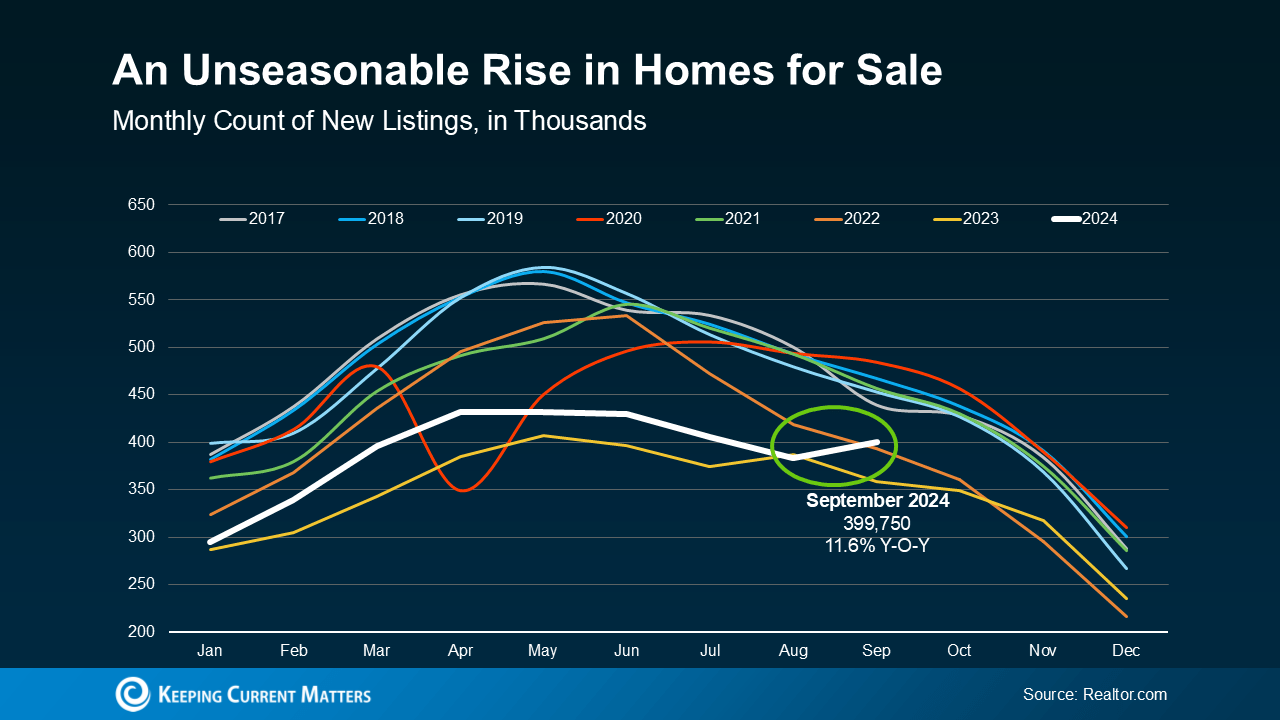 Ralph McLaughlin, Senior Economist at Realtor.com, explains why there was an unseasonable rise:
“This sharp increase is largely due to the decline in mortgage rates in mid-August, enticing homeowners to sell.”
So, as rates came down at the end of the summer, more people jumped into the market and decided to make their move.
What Does This Mean If You’re Looking To Buy a Home?
It means more fresh options to choose from than you’ve had in a while – not the ones that have been sitting around, unsold.
But keep in mind, mortgage rates have been volatile lately, ticking up slightly in recent weeks, which could limit the number of people who feel comfortable with the idea of selling in the months ahead. And in this market, it’s mortgage rates that are largely driving homeowner decisions.
Why Buy Now, Rather Than Wait?
Whether you’re looking for a starter home, an upgrade, or hoping to downsize, you have more homes to choose from right now. And if you can find what you’re looking for, know that these new, fresh options won’t be on the market forever. So, staying on top of what’s available in your local area with a trusted agent is key.
And remember, one month doesn’t make a trend. So, what does that mean going forward? Whether more homeowners than normal continue to put their houses on the market will largely depend on what happens with mortgage rates and the economic factors that impact them, like inflation, employment, and the reactions by the Federal Reserve.
With that in mind, now might be your moment, while more homes are available – if you’re ready, willing, and able to buy this fall.
Lawrence Yun, Chief Economist at the National Association of Realtors (NAR), explains:
“The rise in inventory – and, more technically, the accompanying months’ supply – implies home buyers are in a much-improved position to find the right home and at more favorable prices.”
Bottom Line
As rates came down at the end of the summer, sellers started to trickle back into the market, which means buyers have more choices right now. And working with a trusted local real estate agent is the best way to take advantage of your new options before they’re all scooped up.

by Denise Franklin | Sep 4, 2024 | Agent Value, Mortgage Rates
Now that it’s September, all eyes are on the Federal Reserve (the Fed). The overwhelming expectation is that they’ll cut the Federal Funds Rate at their upcoming meeting, driven primarily by recent signs that inflation is cooling, and the job market is slowing down. Mark Zandi, Chief Economist at Moody’s Analytics, said:
“They’re ready to cut, just as long as we don’t get an inflation surprise between now and September, which we won’t.”
But what does this mean for the housing market, and more importantly, for you as a potential homebuyer or seller?
Why a Federal Funds Rate Cut Matters
The Federal Funds Rate is one of the key factors that influences mortgage rates – things like the economy, geopolitical uncertainty, and more also have an impact.
When the Fed cuts the Federal Funds Rate, it signals what’s happening in the broader economy, and mortgage rates tend to respond. While a single rate cut might not lead to a dramatic drop in mortgage rates, it could contribute to the gradual decline that’s already happening.
As Mike Fratantoni, Chief Economist at the Mortgage Bankers Association (MBA), points out:
“Once the Fed kicks off a rate-cutting cycle, we do expect that mortgage rates will move somewhat lower.”
And any upcoming Federal Funds Rate cut likely won’t be a one-time event. Lawrence Yun, Chief Economist at the National Association of Realtors (NAR), says:
“Generally, the rate-cutting cycle is not one-and-done. Six to eight rounds of rate cuts all through 2025 look likely.”
The Projected Impact on Mortgage Rates
Here’s what experts in the industry project for mortgage rates through 2025. One contributing factor to this ongoing gradual decline is the anticipated cuts from the Fed. The graph below shows the latest forecasts from Fannie Mae, MBA, NAR, and Wells Fargo (see graph below):
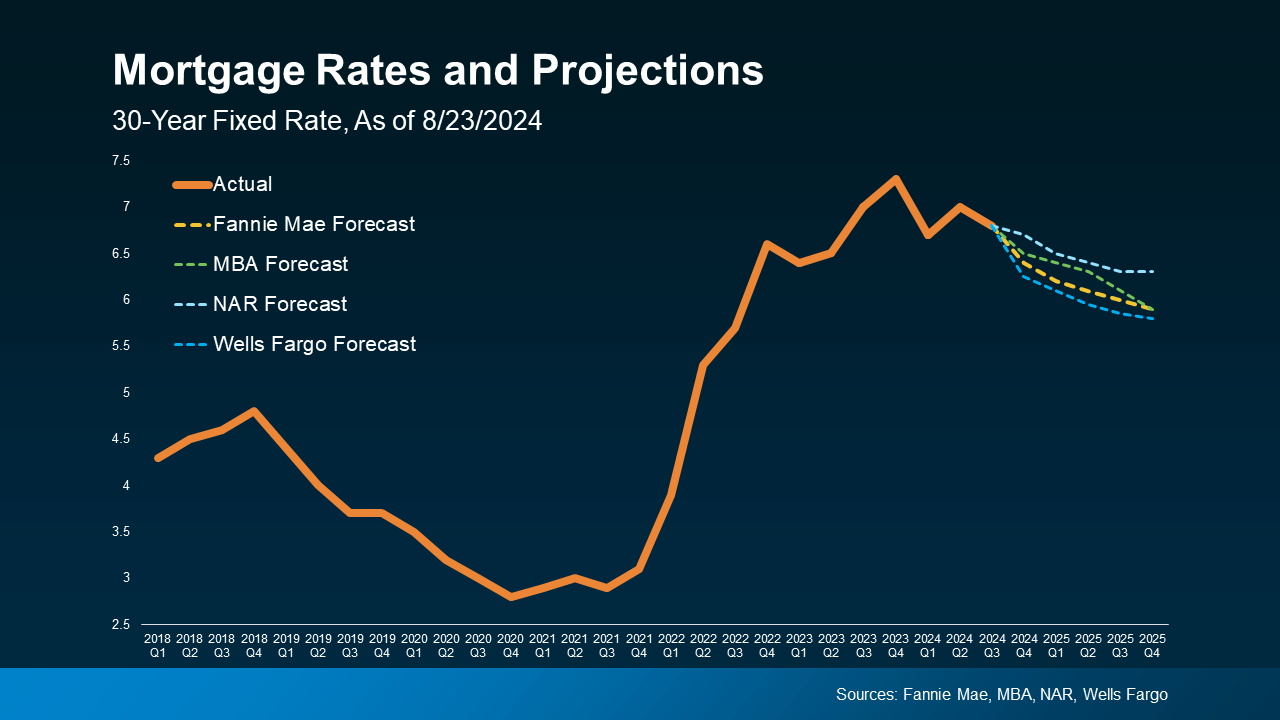 So, with recent improvements in inflation and signs of a cooling job market, a Federal Funds Rate cut is likely to lead to a moderate decline in mortgage rates (shown in the dotted lines). Here are two big reasons why that’s good news for both buyers and sellers:
1. It Helps Alleviate the Lock-In Effect
For current homeowners, lower mortgage rates could help ease the lock-in effect. That’s where people feel stuck within their current home because today’s rates are higher than what they locked in when they bought their current house.
If the fear of losing your low-rate mortgage and facing higher costs has kept you out of the market, a slight reduction in rates could make selling a bit more attractive again. However, this isn’t expected to bring a flood of sellers to the market, as many homeowners may still be cautious about giving up their existing mortgage rate.
2. It Should Boost Buyer Activity
For potential homebuyers, any drop in mortgage rates will provide a more inviting housing market. Lower mortgage rates can reduce the overall cost of homeownership, making it more feasible for you if you’ve been waiting to make a move.
What Should You Do?
While a Federal Funds Rate cut is not expected to lead to drastically lower mortgage rates, it will likely contribute to the gradual decrease that’s already happening.
And while the anticipated rate cut represents a positive shift for the future of the housing market, it’s important to consider your options right now. Jacob Channel, Senior Economist at LendingTree, sums it up well:
“Timing the market is basically impossible. If you’re always waiting for perfect market conditions, you’re going to be waiting forever. Buy now only if it’s a good idea for you.”
Bottom Line
The expected Federal Funds Rate cut, driven by improving inflation and slower job growth, is likely to have a positive, albeit gradual, impact on mortgage rates. That could help unlock opportunities for you. When you’re ready, connect with a local real estate agent so you’re prepared to take action.

by Denise Franklin | Aug 26, 2024 | Affordability, Mortgage Rates
You won’t find anyone who’s going to argue that mortgage rates have had a big impact on housing affordability over the past couple of years. But there is hope on the horizon. Rates have actually started to come down. And, recently they hit the lowest point we’ve seen in 2024, according to Freddie Mac (see graph below):
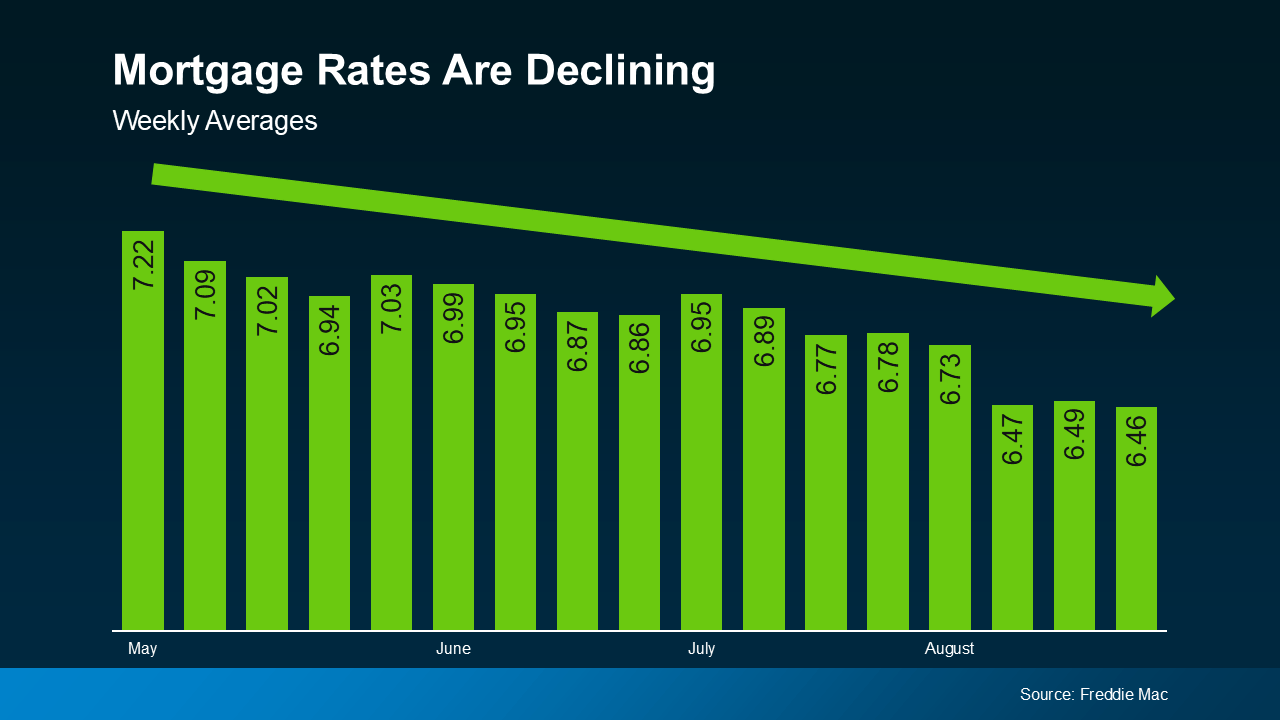 And if you’re thinking about buying a home, that may leave you wondering: how much lower are they going to go? Here’s some information that can help you know what to expect.
Expert Projections for Mortgage Rates
Experts say the overall downward trend should continue as long as inflation and the economy keeps cooling. But as new reports come out on those key indicators, there’s going to be some volatility here and there.
What you need to remember is it’s not wise to let those blips distract you from the larger trend. Rates are still down roughly a full percentage point from the recent peak compared to May.
And the general consensus is that rates in the low 6s are possible in the months ahead, it just depends on what happens with the economy and what the Federal Reserve decides to do moving forward.
Most experts are already starting to revise their 2024 mortgage rate forecasts to be more optimistic that lower rates are ahead. For example, Realtor.com says:
“Mortgage rates have been revised slightly lower as signals from the economy suggest that it will be appropriate for the Fed to begin to cut its Federal Funds rate in 2024. Our yearly mortgage rate average forecast is down to 6.7%, and we revised our year-end forecast to 6.3% from 6.5%.”
Know Your Number for Mortgage Rates
So, what does this mean for you and your plans to move? If you’ve been holding out and waiting for rates to come down, know that it’s already happening. You just have to decide, based on the expert projections and your own budget, when you’ll be willing to jump back in. As Sam Khater, Chief Economist at Freddie Mac, says:
“The decline in mortgage rates does increase prospective homebuyers’ purchasing power and should begin to pique their interest in making a move.”
As a next step, ask yourself this: what number do I want to see rates hit before I’m ready to move?
Maybe it’s 6.25%. Maybe it’s 6.0%. Or maybe it’s once they hit 5.99%. The exact percentage where you feel comfortable kicking off your search again is personal. Once you have that number in mind, you don’t need to follow rates yourself and wait for it to become a reality.
Instead, connect with a local real estate professional. They’ll help you stay up to date on what’s happening and have a conversation about when to make your move. And once rates hit your target, they’ll be the first to let you know.
Bottom Line
If you’ve put your moving plans on hold because of higher mortgage rates, think about the number you want to see rates hit that would make you re-enter the market.
Once you have that number in mind, connect with a real estate professional so you have someone on your side to let you know when we get there.
